.svg)

.png?width=596&height=562&name=2x%20(1).png)
Britain buys between 80–90 million Easter eggs every year, which works out at roughly three per person. It is one of the most competitive seasonal moments in retail, with brands investing heavily in packaging designed to win attention in store.
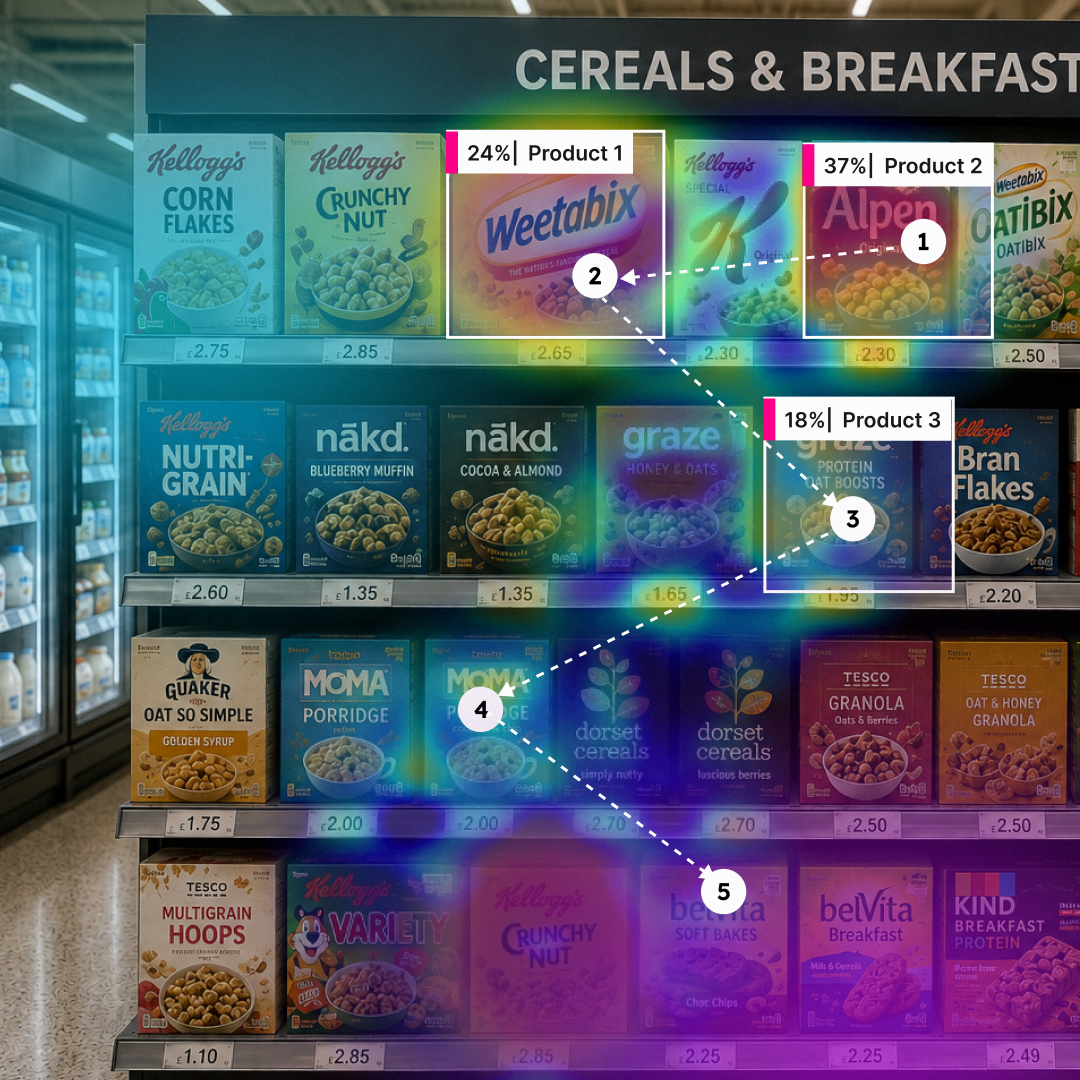
On the physical shelf, that competition plays out through theatre. Embossed lettering, metallic foils, premium finishes and character-led designs are carefully crafted to stand out in a crowded aisle and signal value at glance.
However, the moment that same product appears online, the rules fundamentally change.
From theatre to thumbnail
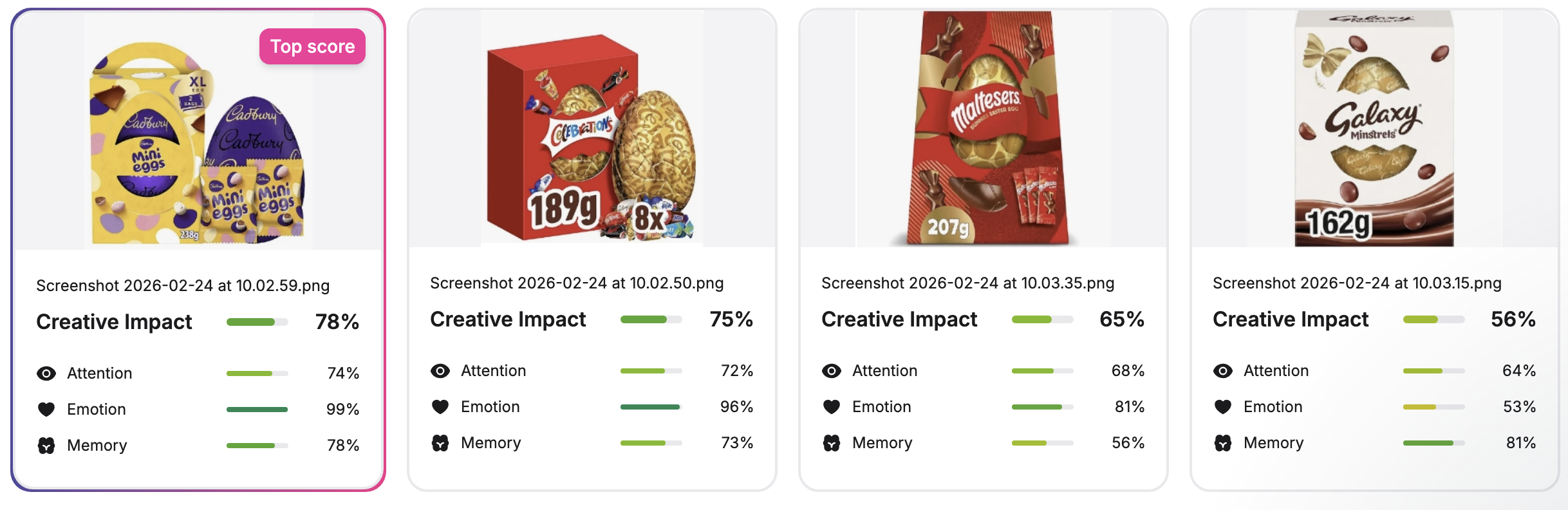
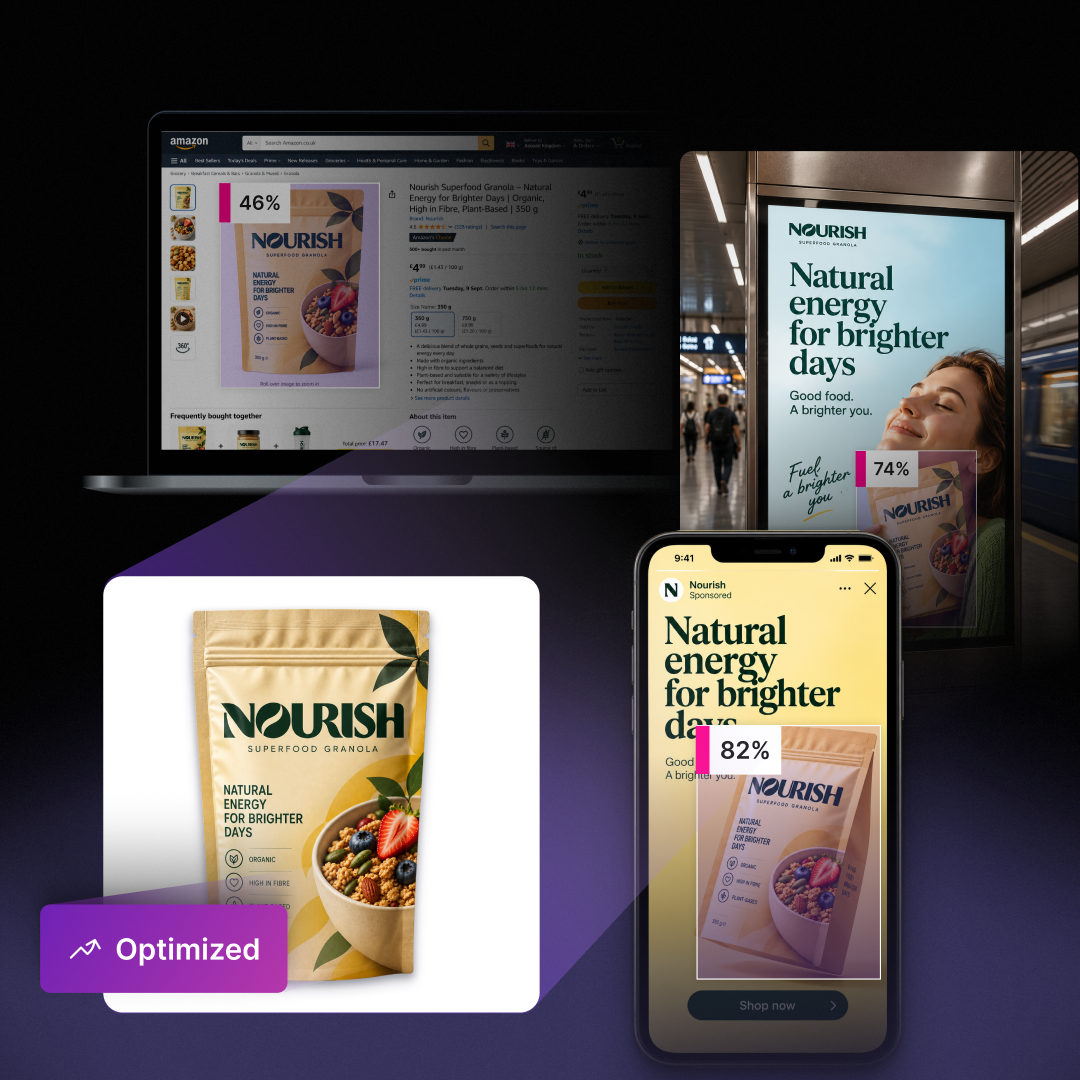
On the digital shelf, packaging is reduced to a small square in a grid. Texture disappears, foil loses its shine, and fine detailing becomes almost imperceptible. What remains is color, contrast, and visual hierarchy.
This shift is particularly important when over 60% of shoppers believe Easter eggs are over-packaged. In store, elaborate boxes can justify their presence through tactility and scale. Online, they must communicate without any of those physical cues. Many are not designed with that reality in mind.
What wins online
Across seasonal categories, the brands that perform strongly online tend to share a common set of characteristics. Their branding is instantly recognizable even at small sizes.
Their designs are simplified enough to remain coherent when scaled down, and characters and distinctive assets retain clarity rather than dissolving into abstraction mid-scroll.
By contrast, intricate detailing and subtle finishes often translate into visual noise in a digital environment. Strong brand blocks, clear hierarchy and high contrast consistently outperform complexity.
The shift brands need to make
Seasonal packaging remains strategically important, but designing purely for physical impact is no longer sufficient. For many shoppers, the digital shelf represents the first moment of truth, not a secondary touchpoint.
At Dragonfly AI, attention data repeatedly shows that effectiveness online is driven by immediate legibility. The packs that win are not necessarily the most elaborate; they are the easiest to process. When branding and key assets are unclear at thumbnail size, attention drops quickly and consideration follows.
The advantage is that digital performance is measurable. Visibility can be tested. Attention can be quantified.
Before approving your next Easter pack, it is worth asking a simple question: Would this still stand out at 2cm wide?
If not, it may already be underperforming where it matters most.