.svg)

.png?width=596&height=562&name=2x%20(1).png)
A visit to the Easter aisle makes one thing immediately apparent: this is a category driven by scale and spectacle. Larger boxes dominate the shelf, metallic foils reflect the overhead lighting, and structural packaging extends height and width to create presence in an already crowded space. Subtlety rarely defines the environment; visibility does.
For seasonal brands, physical retail continues to reward prominence. Increased height improves sightlines across the aisle, reflective materials attract attention from distance, and dimensional packaging creates separation among a dense field of competitors. When dozens of brightly colored products compete within a short seasonal window, physical impact becomes a powerful commercial lever.
Yet there is a clear tension at the center of the category.
More than 60% of shoppers say Easter eggs are over-packaged. Despite this, the most elaborate and visually amplified packs often command the greatest in-store presence. The physical shelf still incentivizes drama, even as consumer sentiment signals fatigue with excess.
The challenge becomes evident when those same products transition online. On the digital shelf, every pack is reduced to a uniform thumbnail within a grid. Height loses its advantage, metallic finishes flatten, and structural engineering becomes largely irrelevant.
The cues that drive dominance in store – scale, dimensionality and shine – are effectively neutralized. What remains is brand clarity, contrast and visual hierarchy.
In this environment, spectacle does not guarantee visibility. Immediate legibility does.
Seasonal brands are therefore designing for two fundamentally different competitive contexts. The physical aisle rewards disruption and scale. The digital shelf rewards clarity and ease of processing.
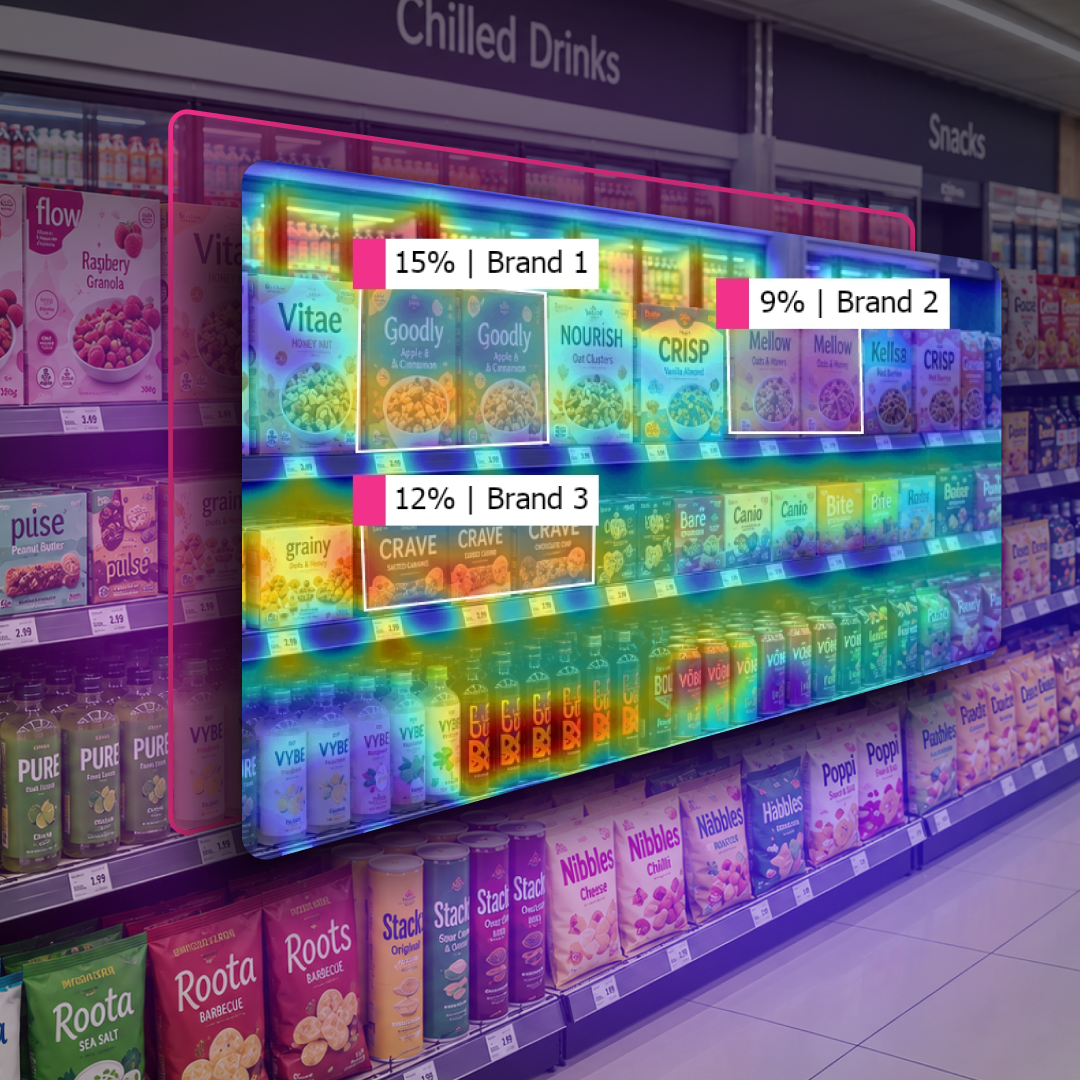
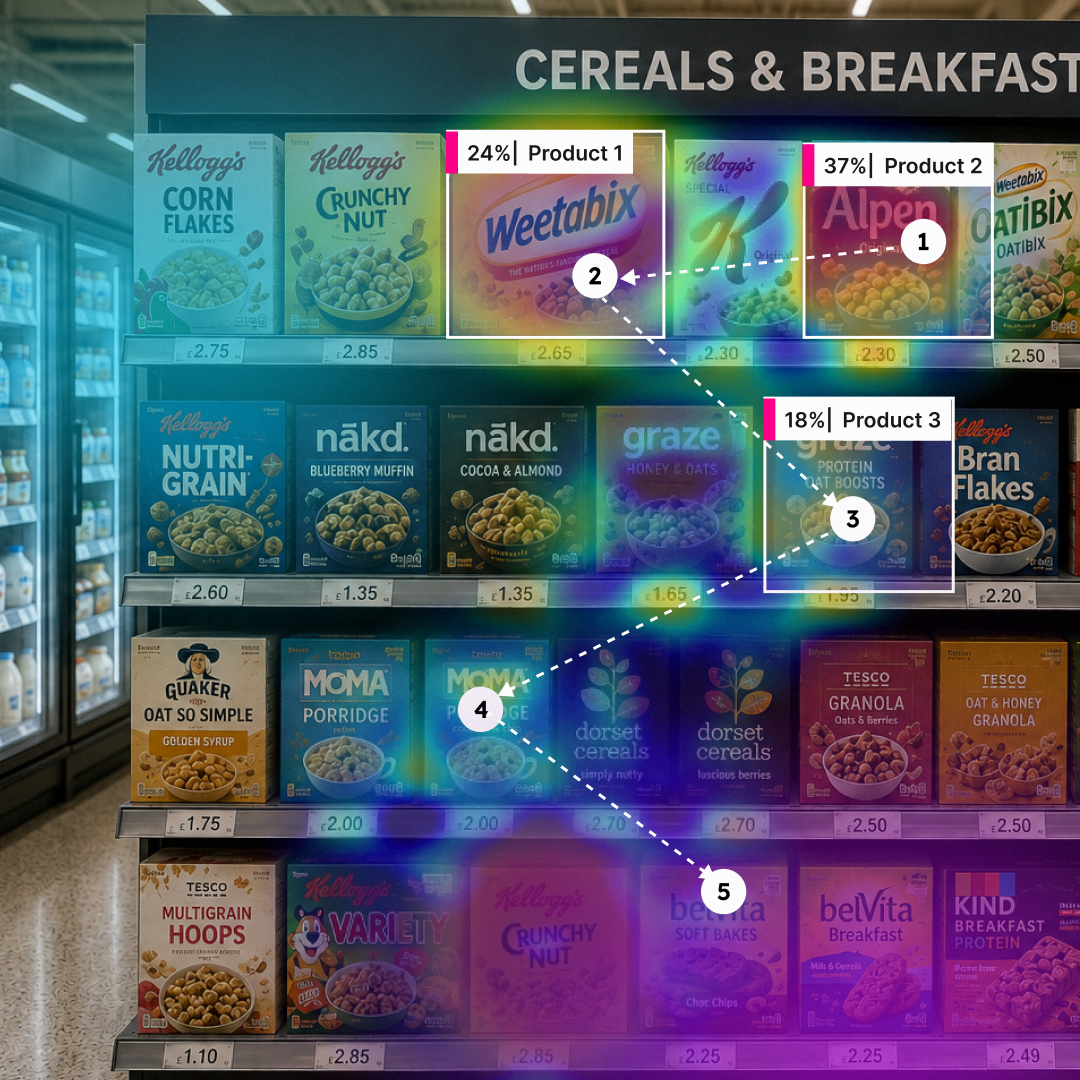
At Dragonfly AI, attention data consistently shows that when branding and key assets are not immediately recognizable at small sizes, visibility declines sharply. Packs engineered primarily for physical theatre can lose significant impact once reduced to thumbnail scale, where hierarchy and contrast become decisive.
The strategic question is no longer whether a pack stands out in store alone. It is whether it has been objectively tested to perform across both environments.
Because in today’s retail landscape, winning requires visibility on every shelf.