.svg)

.png?width=596&height=562&name=2x%20(1).png)
Marketers trust A/B testing the way scientists trust a controlled experiment: show two versions, measure the winner, act on the data. But A/B testing on ad platforms is increasingly unreliable – not because testing is a bad idea, but because the platforms running the tests are no longer built to give a clean answer.
Marketers trust A/B testing the way scientists trust a controlled experiment: show two versions, measure the winner, act on the data. But A/B testing on ad platforms is increasingly unreliable – not because testing is a bad idea, but because the platforms running the tests are no longer built to give a clean answer.
Why A/B testing on ad platforms can't be trusted the way it used to
Meta's Advantage+ and Google's Performance Max increasingly manage campaign delivery through automated, black-box optimisation. Creative, audience, budget and placement are blended and adjusted in real time by a machine-learning system optimising for delivery efficiency, not for isolating what actually worked. Meta's own leadership said its end-to-end AI-powered ad tools, including the Advantage+ suite, had surpassed a $60bn annual revenue run rate by its Q3 2025 earnings call – a sign of just how much campaign activity now sits inside this automated layer.
Ask an “A/B test” run inside one of these systems which creative variant won, and the honest answer is that no one – including the platform – can fully separate the effect of the image from the effect of the audience it happened to reach, the time of day it was shown, or the dozens of other variables the algorithm was quietly adjusting at the same time.
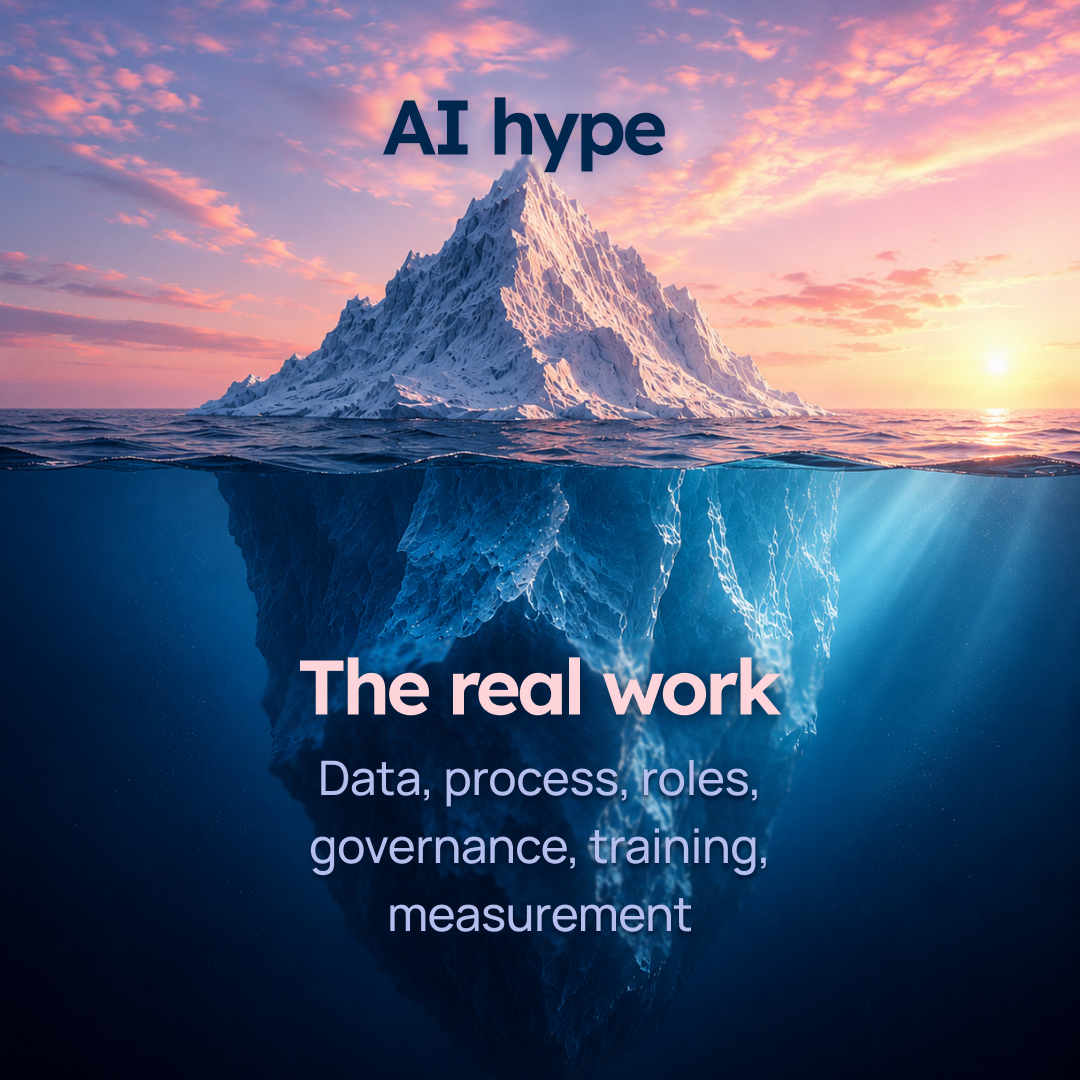
Read: AI hype is fading fast - now the harder work begins
The statistics behind A/B testing are weaker than they look
Even where platforms preserve a cleaner split-test structure, the statistics underneath are shakier than most marketing teams assume. Microsoft's own published experimentation research, led by Ron Kohavi, found that of the ideas rigorous enough to reach a controlled test, roughly a third produced a statistically significant positive result, a third were flat, and a third were statistically significant negative.
Novelty effects inflate early results before they decay, and peeking at results before a test reaches significance – checking the dashboard daily and stopping as soon as a “winner” emerges – is one of the most common ways false positives creep into marketing decisions. The test looks conclusive. Statistically, it rarely is.
None of this means testing should stop. It means testing after launch, inside a platform's own algorithm, answers a narrower question than marketers think it does: not “is this creative good?” but “did this specific execution perform well in this specific, algorithmically shaped moment?” Two different creative assets can trade places as the “winner” simply because the platform allocated them to different audiences.
Read: The future of packaging isn't just what's launched - it's what gets seen
A more reliable way to test creative before it goes live
The more reliable signal comes from evaluating creative before it enters that black box. Predictive testing – measuring how an asset is likely to capture attention, encode into memory and land emotionally, based on principles of human perception that hold regardless of channel or algorithm – provides a read on creative quality that isn't contaminated by auction dynamics or novelty bias. It won't tell you how a campaign will perform in a specific auction. It will tell you, before a pound of media is spent, whether the creative itself is doing its job.
Platform A/B tests and pre-market prediction aren't competitors; they answer different questions. But treating a platform's automated test result as proof of creative quality is where marketers are getting fooled. The algorithm optimised for delivery. It never promised to tell you the truth about your creative.