.svg)

.png?width=596&height=562&name=2x%20(1).png)
What are ad attention metrics in marketing?
Ad attention metrics measure how effectively an advert captures and holds a viewer's attention. They provide marketers with a more meaningful way to evaluate creative performance than impressions or clicks alone.
Ad attention metrics are measurements that help marketers understand how much attention an advert is likely to receive and how effectively it communicates its message. Rather than focusing solely on whether an ad was served or viewed, attention metrics assess whether people are actually likely to notice and engage with the creative.
As digital advertising has become more competitive, marketers have recognised that visibility alone is not enough. An advert may generate impressions without ever capturing meaningful attention. Ad attention metrics provide deeper insight into how consumers interact with creative, making them an increasingly valuable measure of advertising effectiveness.
There are several ways to measure attention, including eye tracking studies, viewability data and AI powered attention prediction. These approaches can evaluate factors such as how quickly key elements are seen, how long they hold attention and whether important branding or messaging is likely to be noticed.
Ad attention metrics are becoming an essential part of campaign planning because they help brands optimise creative before launch and better understand what drives successful advertising. By focusing on attention rather than exposure alone, marketers can make more informed creative decisions and improve campaign performance.
How Dragonfly AI uses ad attention metrics
Dragonfly AI provides predictive ad attention metrics that help brands evaluate creative before it reaches consumers. Using AI models developed through research with Queen Mary University of London, the platform predicts how people are likely to engage with visual content.
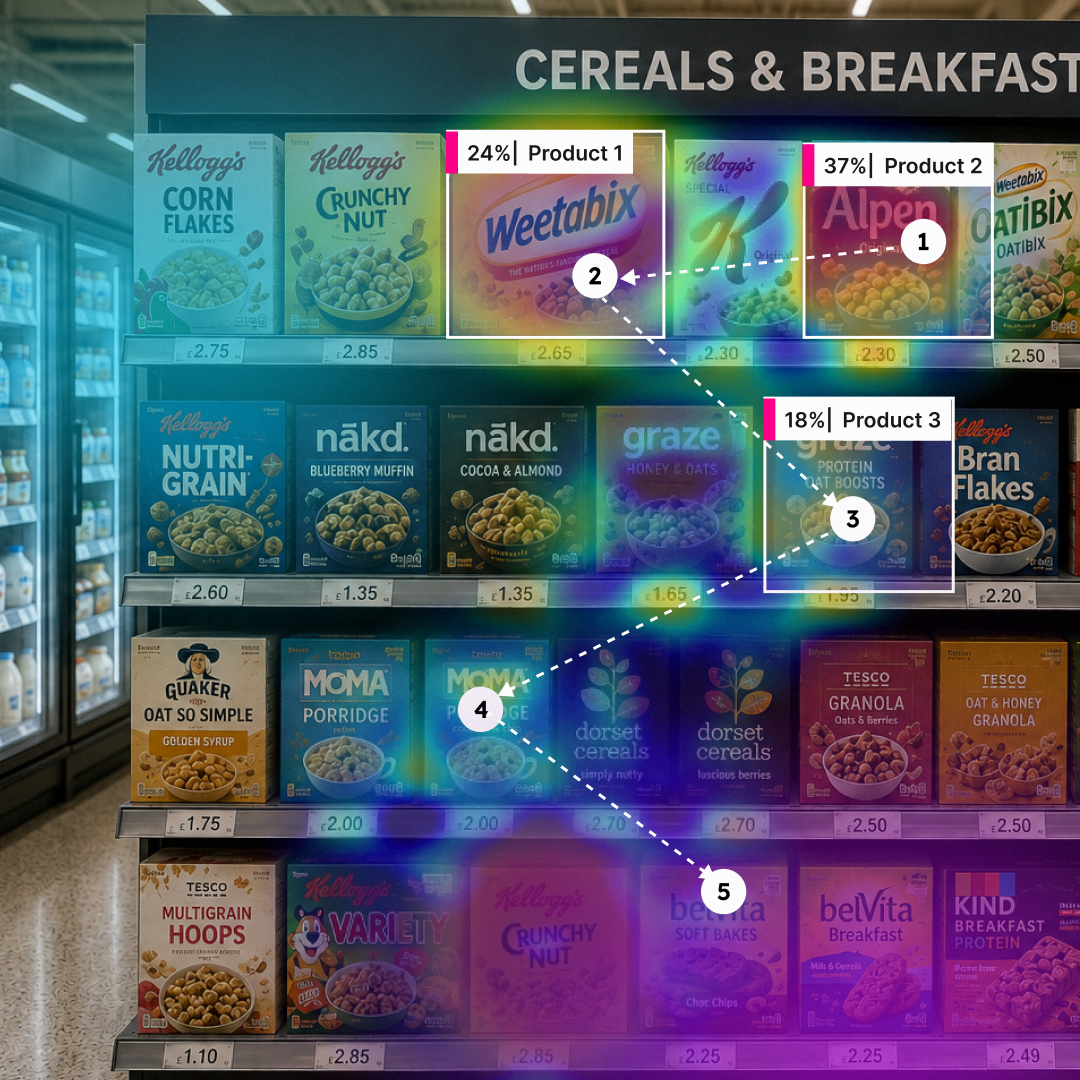
Users receive attention scores alongside visual heatmaps and other insights that show whether key creative elements are likely to attract attention. These metrics allow marketers to compare different creative concepts and identify opportunities for improvement before investing in media spend.
For example, a brand launching a digital advertising campaign can compare multiple versions of an advert to understand which creative is most likely to capture attention and communicate its message effectively.
Ad attention metrics in the UK market
The UK has played a leading role in advancing attention as a measure of advertising effectiveness. Industry organisations such as the UK Attention Council have helped establish common standards and encourage wider adoption of attention based measurement across the advertising industry.
As advertisers look beyond traditional metrics such as impressions and click through rates, attention has become an increasingly important indicator of campaign quality. Brands, agencies and media owners are using attention metrics to improve media planning, creative development and performance evaluation.
This shift reflects the UK's long standing focus on evidence based marketing. By combining advances in artificial intelligence with behavioural science, attention metrics are helping marketers make more informed decisions about both creative and media investment.