.svg)
.png?width=596&height=562&name=2x%20(1).png)
Testing packaging design for UK retail means checking three things before a pack goes to print: will it be seen on shelf, will shoppers remember its brand and message, and how will it make them feel. With own-label products now accounting for more than half of UK grocery volumes, packs have less room than ever to blend in.
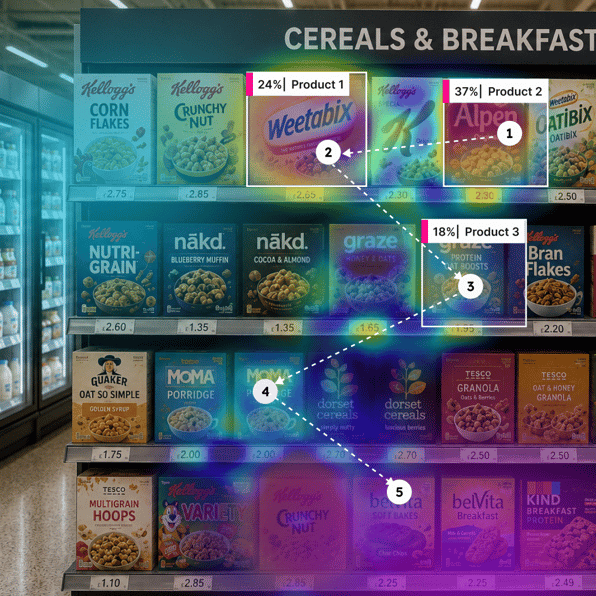
Dragonfly AI tests pack designs against real shelf environments in minutes, predicting shopper response instead of waiting weeks for a panel.
Getting packaging design right matters more in UK retail than it used to. Testing packaging design for UK retail used to mean a slow, expensive round of shopper research after the design was already close to final. AI-powered testing moves that check earlier and makes it something every pack can go through, not just the ones with budget for a full study.
Why pack testing matters more in UK retail right now
Own-label products now account for more than half of UK grocery volumes for the first time, according to Circana data reported by The Grocer – a milestone that reflects just how competitive the UK shelf has become. A pack is no longer just competing against other national brands; in most categories it's sitting inches away from a retailer's own equivalent, designed to look just as credible.
There is less room than ever for a redesign to blend in, and less time to find out it hasn't worked. A pack that fails to stand out isn't just a missed opportunity – it's a wasted print run, a delayed launch, and in some categories a lost distribution slot that's hard to win back.
What actually needs testing before a UK pack goes to shelf
Pack testing should answer three separate questions, not one general "does it look good?" reaction. Attention asks whether the pack will actually be seen – in a category with dozens of near-identical formats, most packs are never consciously registered at all. Memory asks whether the brand, logo and key message will be recalled afterwards, since a pack that's seen but not remembered still fails at the point of repurchase.
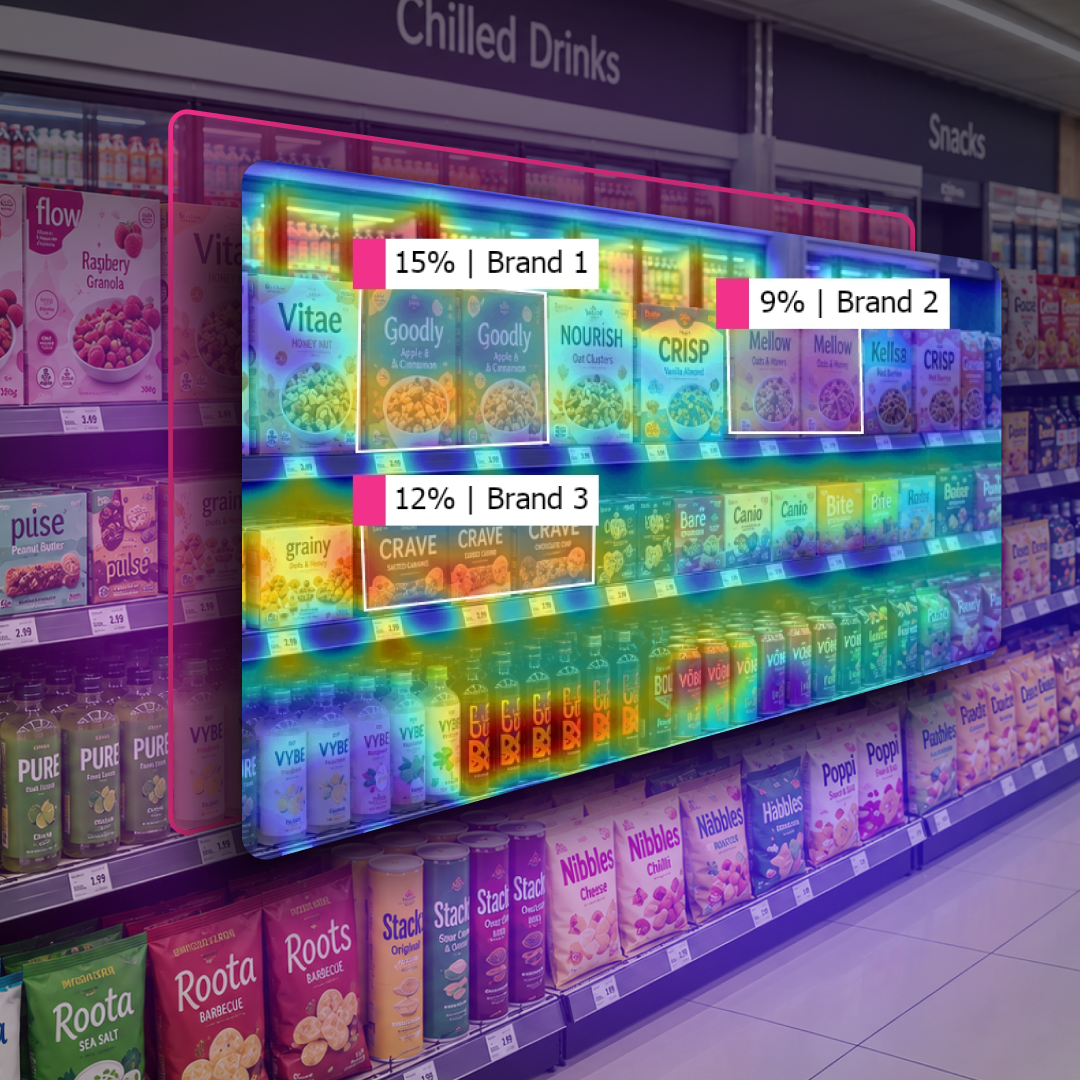
Emotion asks how the pack makes a shopper feel – premium, trustworthy, cheap, dated – which shapes the split-second judgement a shopper makes before they've consciously read a word on it. Dragonfly AI measures all three at both the whole-pack level and at the level of individual elements – logo, claim, hero shot, pack shot – so a team can see exactly which part of the design is doing the work and which isn't.
How Dragonfly AI tests UK retail packaging
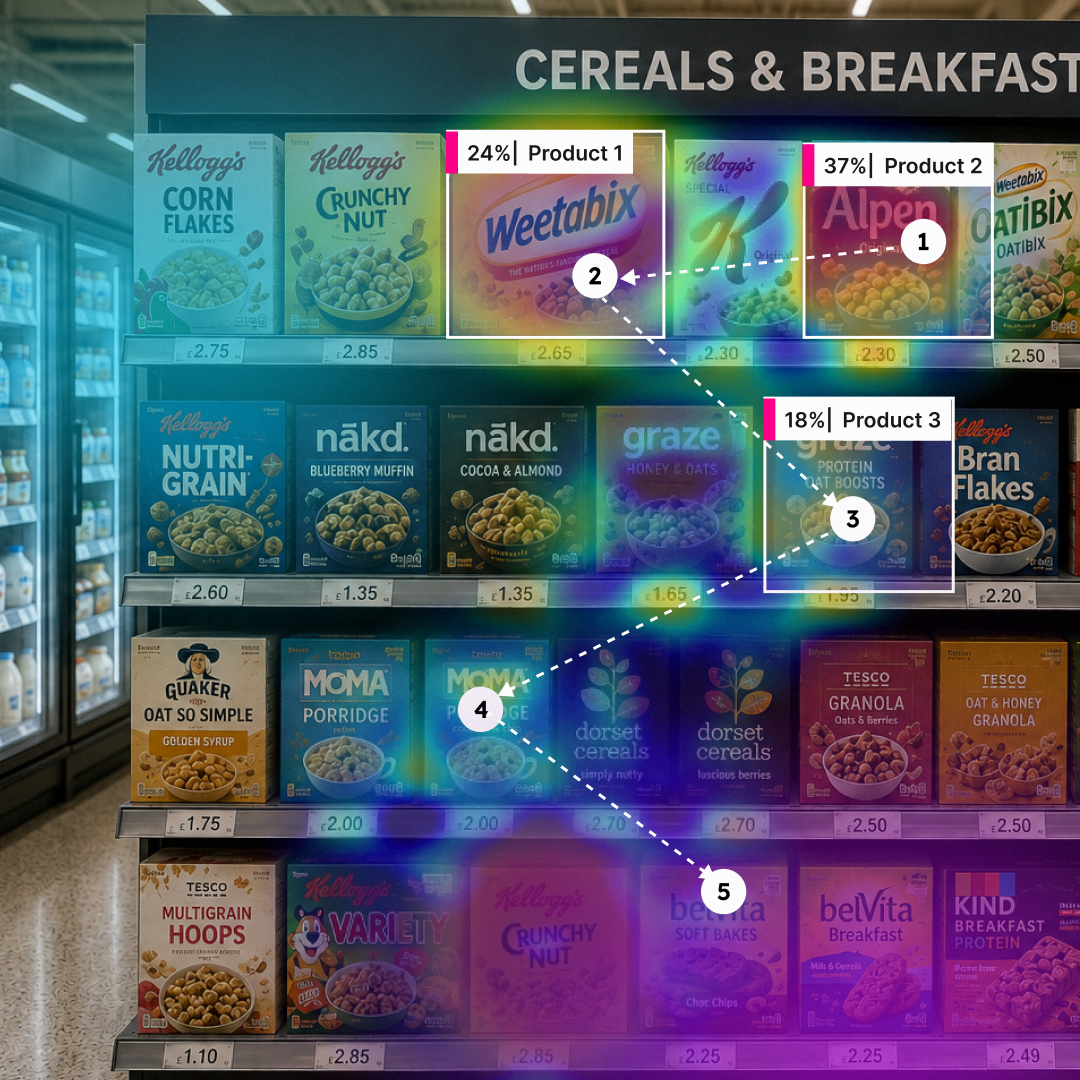
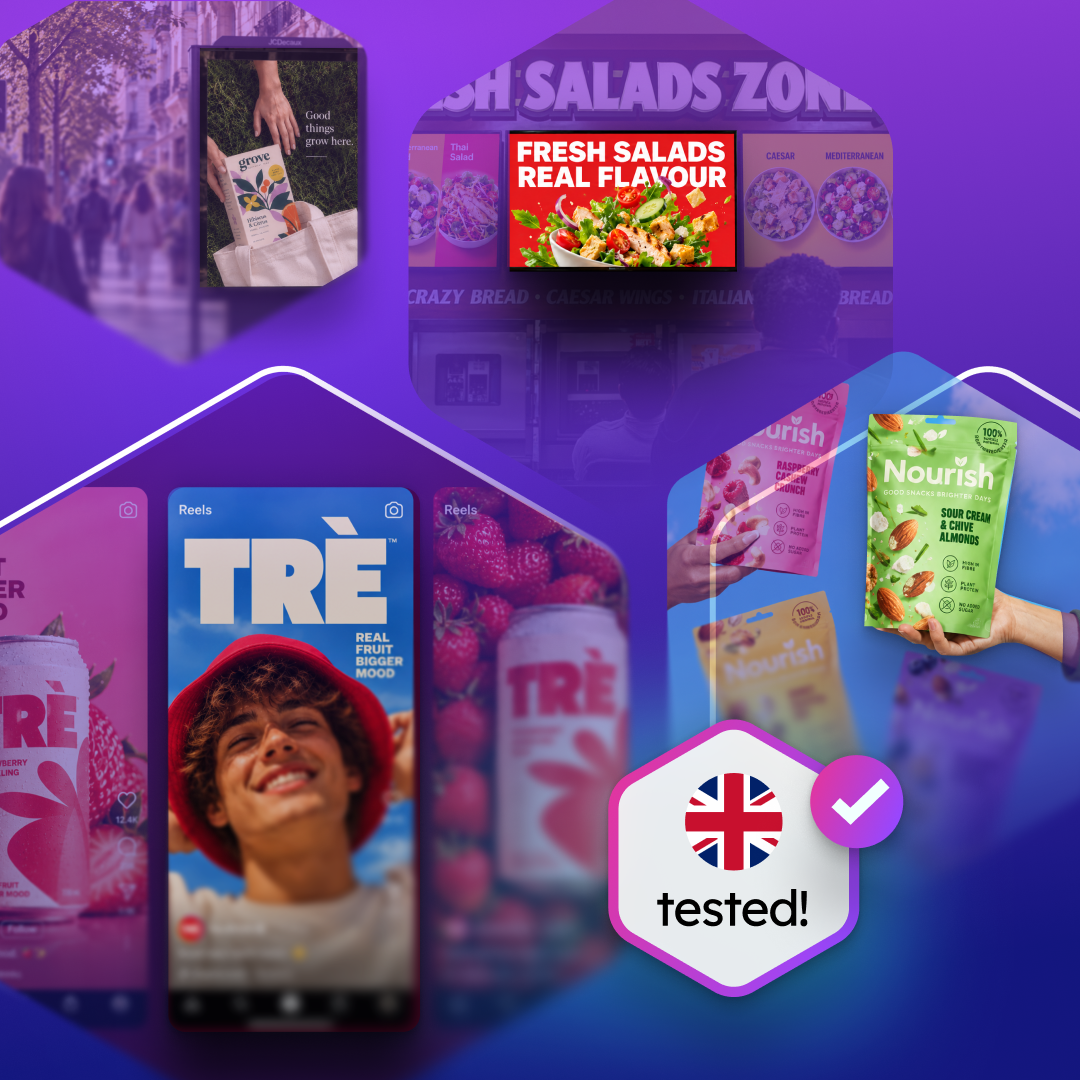
Dragonfly AI supports two ways to test a pack, and most UK retail teams need both. Asset Testing scores the pack design on its own, returning Attention, Memory and Emotion scores plus area-by-area diagnostics for elements like the logo, pack shot and headline claim.
Scene testing places that same pack into a photographed or mocked-up UK shelf environment alongside the specific competitor set it will actually sit next to, showing how visible it is within that real competitive context rather than in isolation – the difference between 'does this pack look good' and 'will this pack actually get noticed on this shelf'.
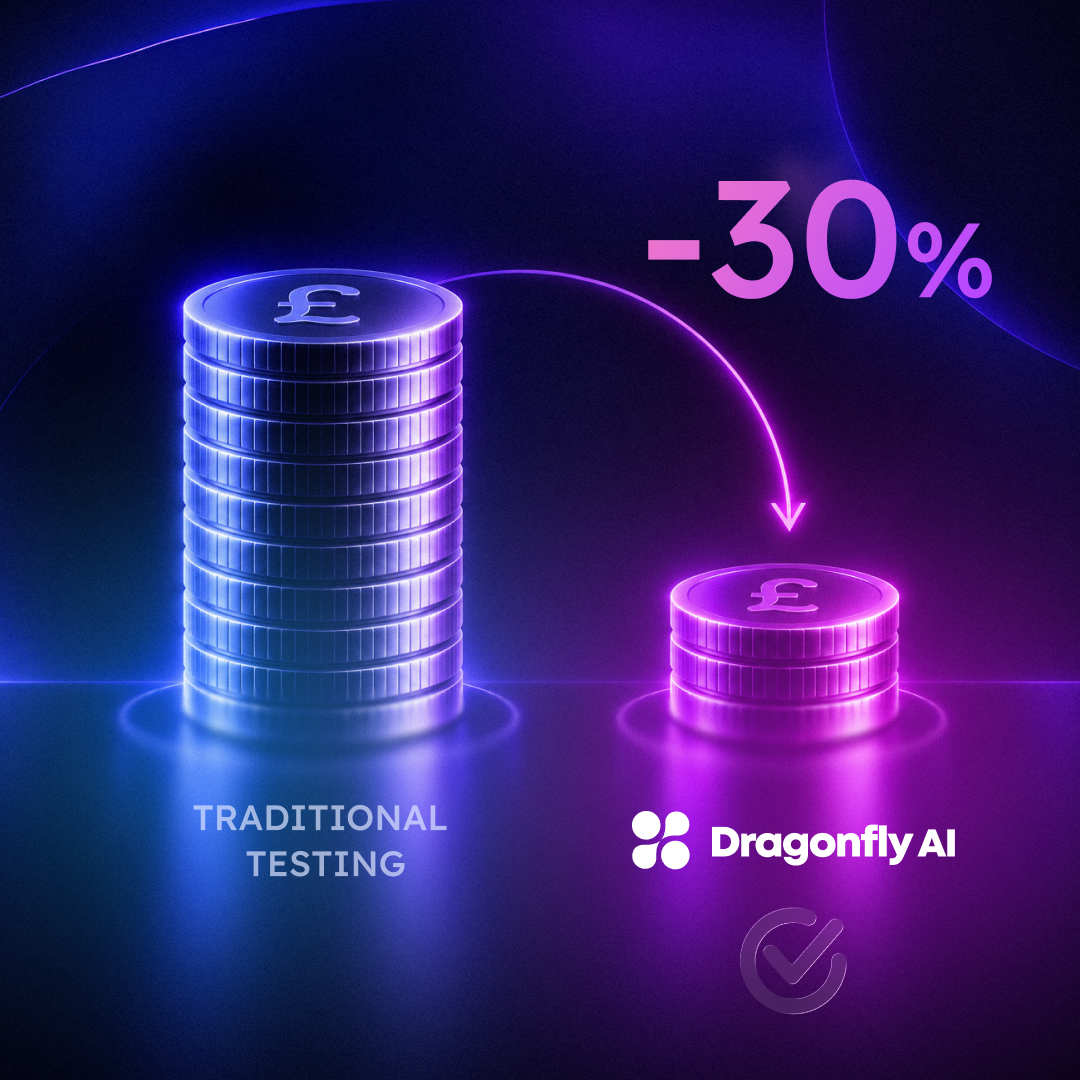
Because both run as a predictive model rather than a consumer test, results come back in minutes rather than weeks, with no panel to recruit and no print run needed to find out whether a design works. That makes it realistic to test every pack in a range before a decision is locked in, not just the lead SKU.